- Have Any Question
- +91 73003-34053
- +91 89494-67853
- hornbilleventplanner001@gmail.com


Corporate Event Planner in Udaipur | Conference & Seminars
November 24, 2025
Nupur Sanon Wedding: A Dream Celebrity Destination Wedding in Udaipur
January 10, 2026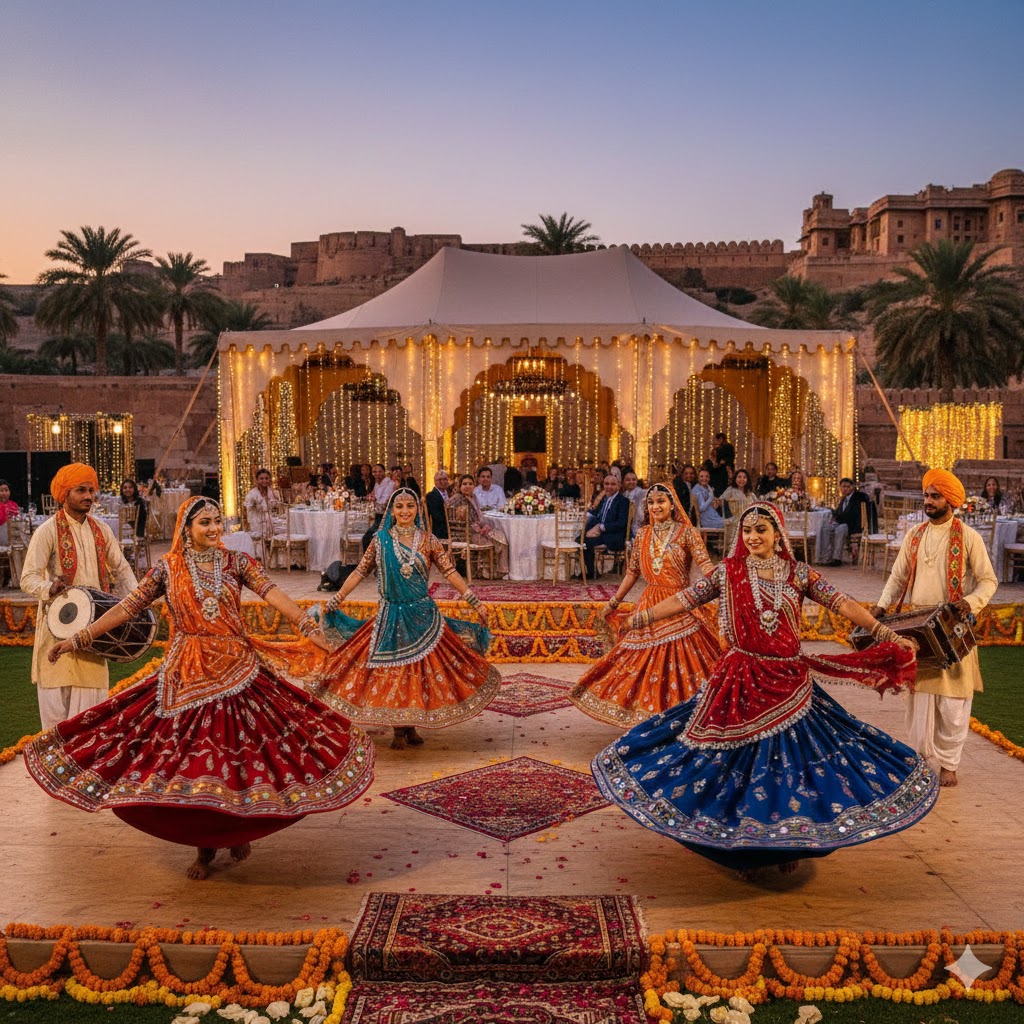
Rajasthani Folk Dance Group by Hornbill Event Planner
Rajasthan is the land of kings, deserts, forts, and timeless traditions. Among its most powerful cultural expressions are its folk dances, which reflect the lifestyle, emotions, rituals, and stories of the people of this vibrant state. Rajasthani folk dances are not just performances, they are living traditions passed down through generations, performed during weddings, festivals, harvest celebrations, and royal gatherings.
Today, these dances are no longer limited to Rajasthan alone. They are admired and performed across India and internationally, becoming an integral part of weddings, cultural festivals, corporate events, and luxury celebrations.
The Cultural Importance of Rajasthani Folk Dance
Rajasthani folk dances were traditionally performed to celebrate various important moments of life and society, including:
- Marriage ceremonies
- Seasonal festivals
- Birth of a child
- Victory in battles
- Religious and spiritual occasions
Each dance form represents a unique region, community, or belief system. The colorful costumes, intricate mirror work, heavy traditional jewelry, and live folk music together create an immersive cultural experience that instantly transports audiences into Rajasthan’s royal past.
Ghoomar – The Dance of Grace and Royalty
Ghoomar is one of the most elegant and well-known Rajasthani folk dances. Originally performed by royal women, this dance symbolizes grace, modesty, and celebration. The slow spins, flowing ghagras, and gentle hand movements create a visually mesmerizing performance.
Traditionally performed during weddings and festivals like Teej and Gangaur, Ghoomar has now become a popular choice across India for:
- Wedding ceremonies
- Cultural evenings
- Luxury heritage events
Kalbeliya – Rhythm, Energy, and Desert Soul
The Kalbeliya dance comes from the Kalbeliya community, historically known for snake charming. This dance is fast-paced, energetic, and expressive, with movements inspired by the slithering motion of snakes.
Recognized by UNESCO as an Intangible Cultural Heritage, Kalbeliya is loved across India for its dramatic spins, acrobatic flexibility, and powerful folk music featuring instruments like the pungi and dholak.
Bhavai – The Art of Balance and Skill
Bhavai dance is one of the most challenging Rajasthani folk dances, showcasing extraordinary balance and strength. Female dancers perform while balancing multiple earthen pots on their heads—sometimes even dancing on glass or swords.
This dance reflects the resilience and confidence of Rajasthani women and is admired for its breathtaking visual impact, making it suitable for grand cultural stages and large celebrations.
Terah Taali – Devotion Through Rhythm
Terah Taali is a spiritual folk dance performed by women from the Kamada community. The name comes from the 13 metal cymbals tied to different parts of the body, which create rhythm as the dancer moves.
Performed in a seated position, this dance is deeply devotional and often dedicated to folk deities. It is a powerful reminder that Rajasthani folk dance is not only about entertainment but also about faith and tradition.
Chari Dance – Celebrating Joy and Prosperity
The Chari dance originates from the Kishangarh region and symbolizes happiness and prosperity. Dancers balance brass pots (charis) with fire or lamps on their heads while moving gracefully.
Traditionally performed during weddings and joyful occasions, this dance adds elegance and symbolism to celebrations across India.
Fire Dance – Courage and Tradition
The Rajasthani fire dance is a bold and thrilling performance where dancers move barefoot on burning coal and fire. Originating from desert communities, it reflects courage, devotion, and control over fear.
This dramatic dance is usually performed at night and creates a powerful visual spectacle, especially during large cultural gatherings and celebrations.
Kathputli – Rajasthan’s Storytelling Art
Kathputli (puppet show) is one of India’s oldest forms of storytelling. Using wooden puppets, folk artists narrate tales of kings, queens, warriors, and folklore through music and dialogue.
Kathputli performances are especially popular at family events, cultural fairs, and destination weddings, adding a nostalgic and traditional touch.
Book Rajasthani Folk Dance Across India Today
With growing appreciation for cultural authenticity, Rajasthani folk dances are now performed across major Indian cities and destination venues. From weddings in Goa to corporate events in Mumbai, cultural festivals in Delhi, and luxury celebrations in South India, these dances connect audiences to India’s roots.
They are often blended with modern stage setups while retaining their traditional soul, making them suitable for contemporary events without losing authenticity.
Rajasthani Folk Dancer Booking by Hornbill Event Planner
At Hornbill Event Planner, we help bring these authentic Rajasthani folk dance traditions to events anywhere in India. We work with skilled folk artists who preserve the originality of each dance form while adapting performances to suit different event formats.
From selecting the right dance style to managing artists,Rajasthani Folk music, costumes, and coordination, our role is to ensure the cultural essence remains intact while the experience stays seamless for the host.
Celebrate Indian Culture Through Rajasthani Folk Dance
Rajasthani folk dances are a celebration of India’s diversity, resilience, and artistic excellence. Whether it is the elegance of Ghoomar, the energy of Kalbeliya, or the devotion of Terah Taali, each dance tells a story that continues to inspire audiences across the country.
By including these traditional performances in modern celebrations, we keep India’s cultural heritage alive—one rhythm, one spin, and one story at a time.